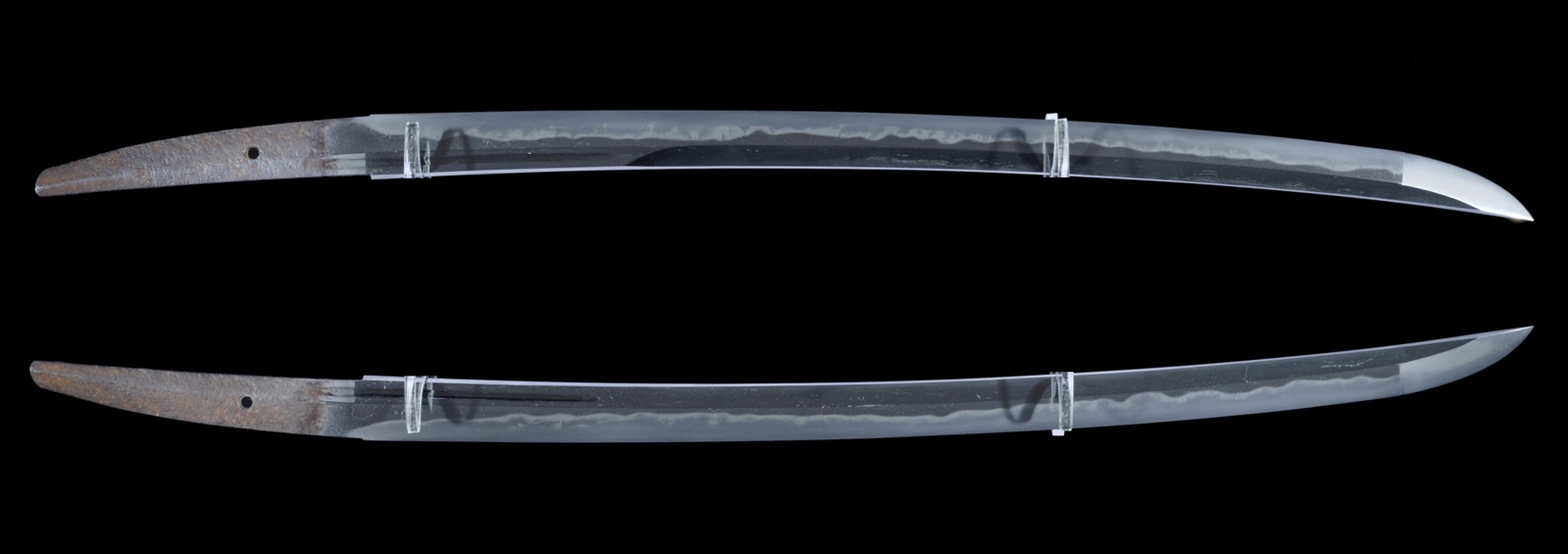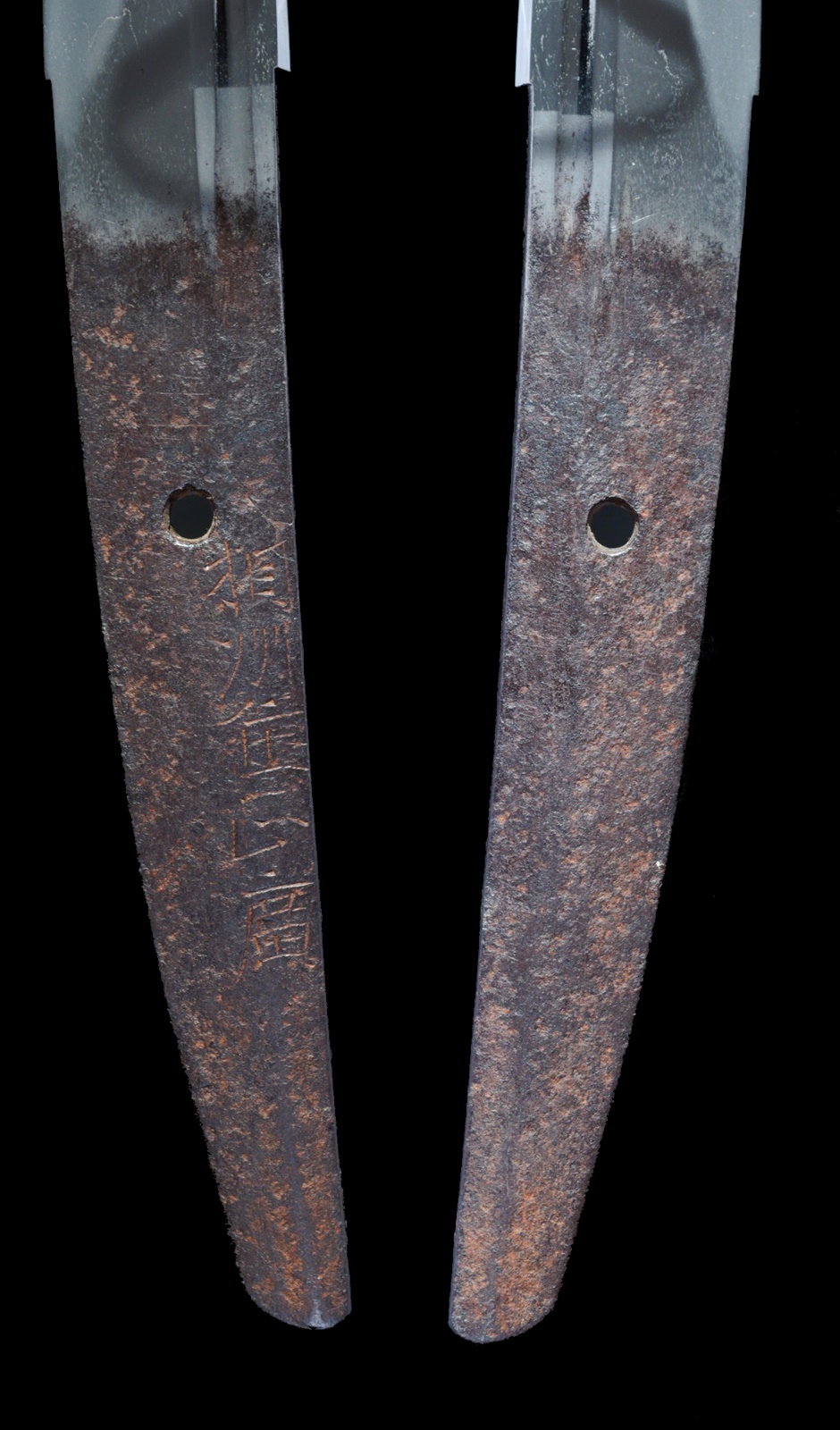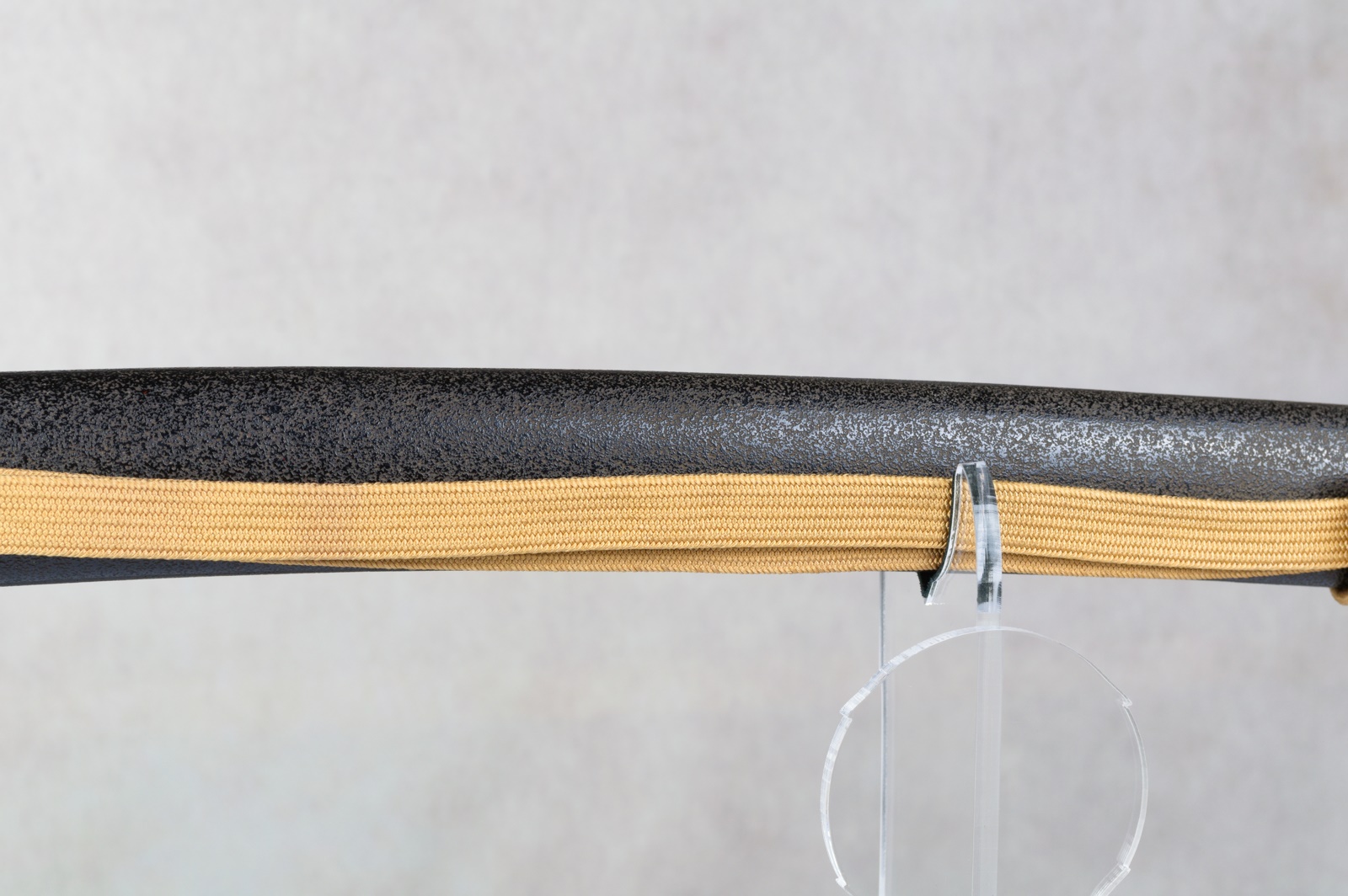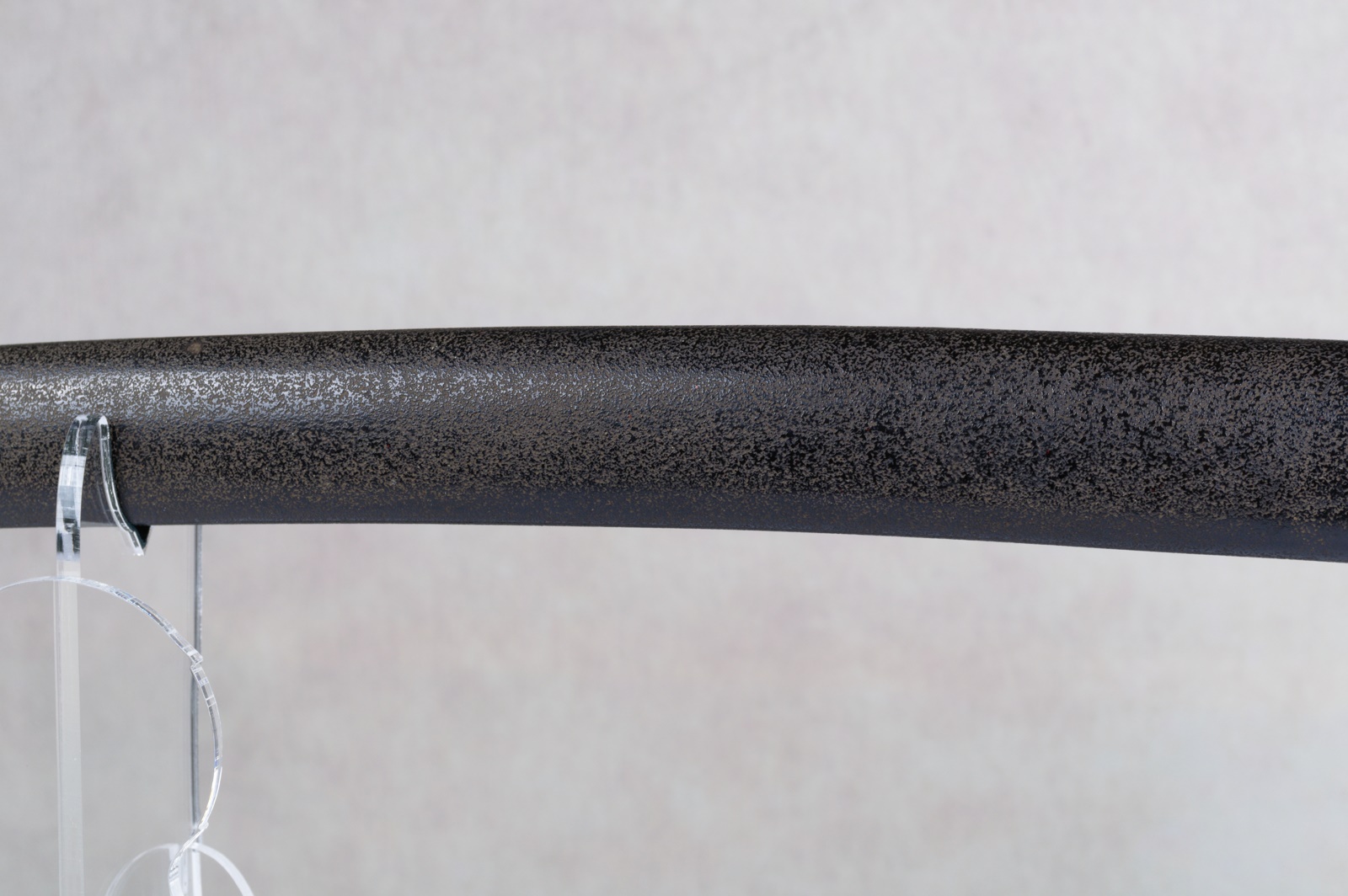
Wakizashi signed Soshu Ju Masahiro – 相州住正弘
This sword comes from the sixth generation of Masahiro, also known as Tsunahiro Yamamura.
He changed his name to Tsunahiro when he entered the service of Hōjō Ujitsuna of the Go-Hōjō clan, one of the most powerful warrior clans of the Sengoku period (1477-1573).
This signature is rare because it seems that the majority of his work was produced under the name Tsunahiro.
Muromachi period (~1532) – Koto
Sagami Province
Sue-Soshu School
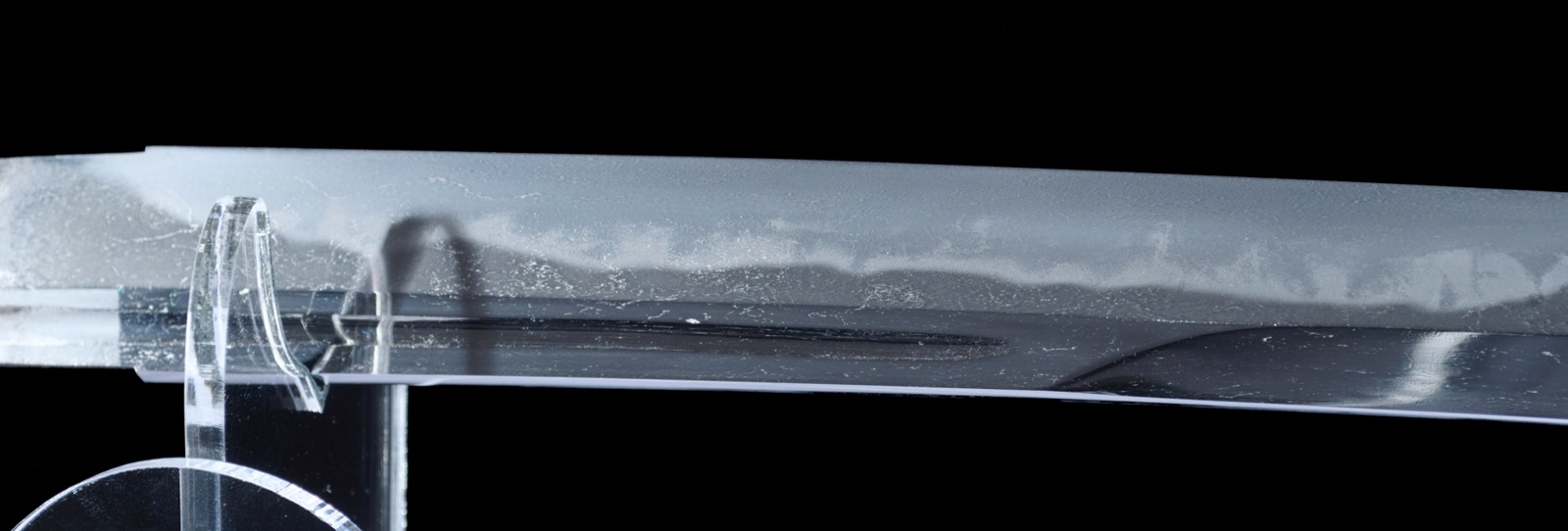
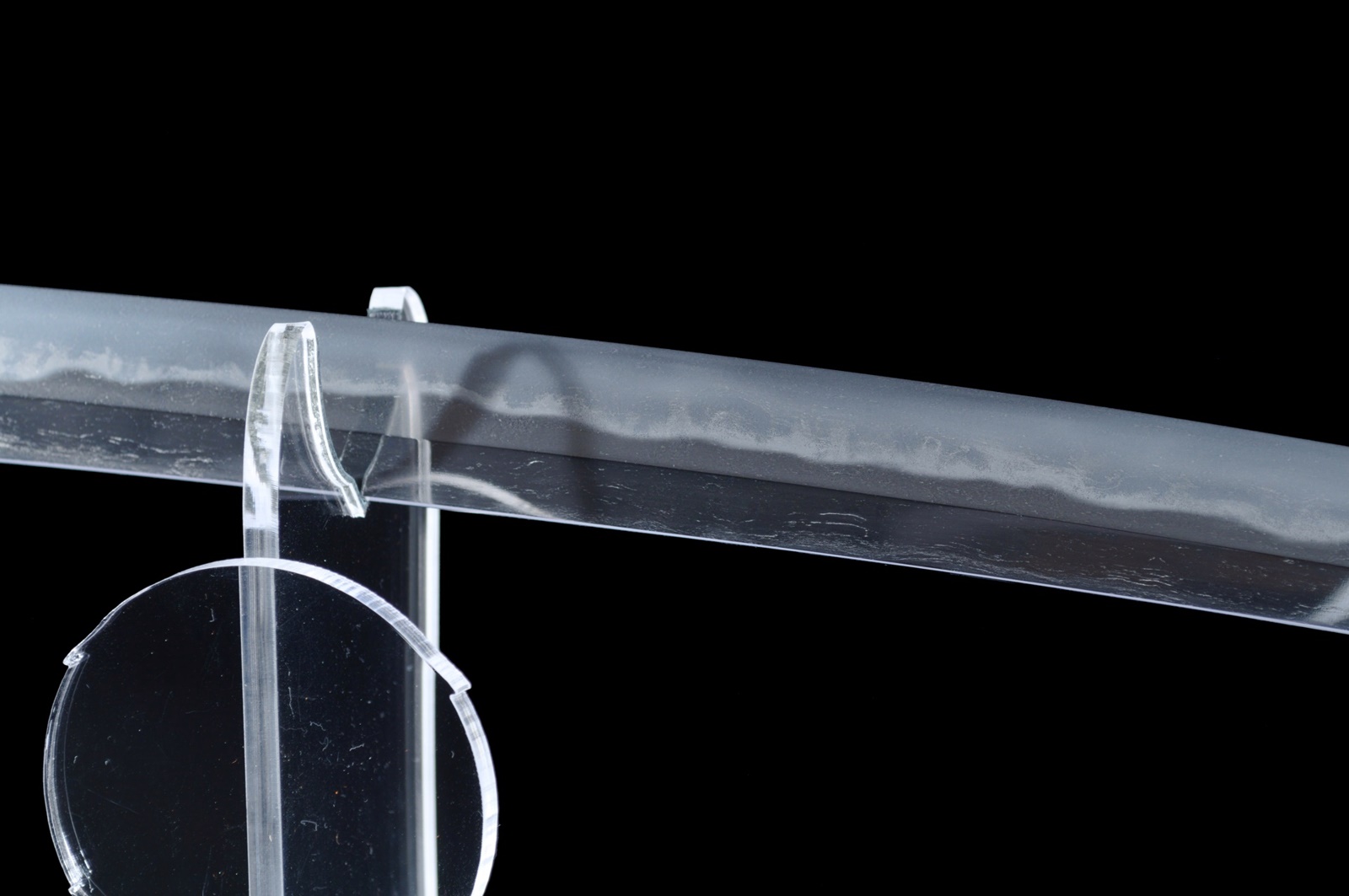
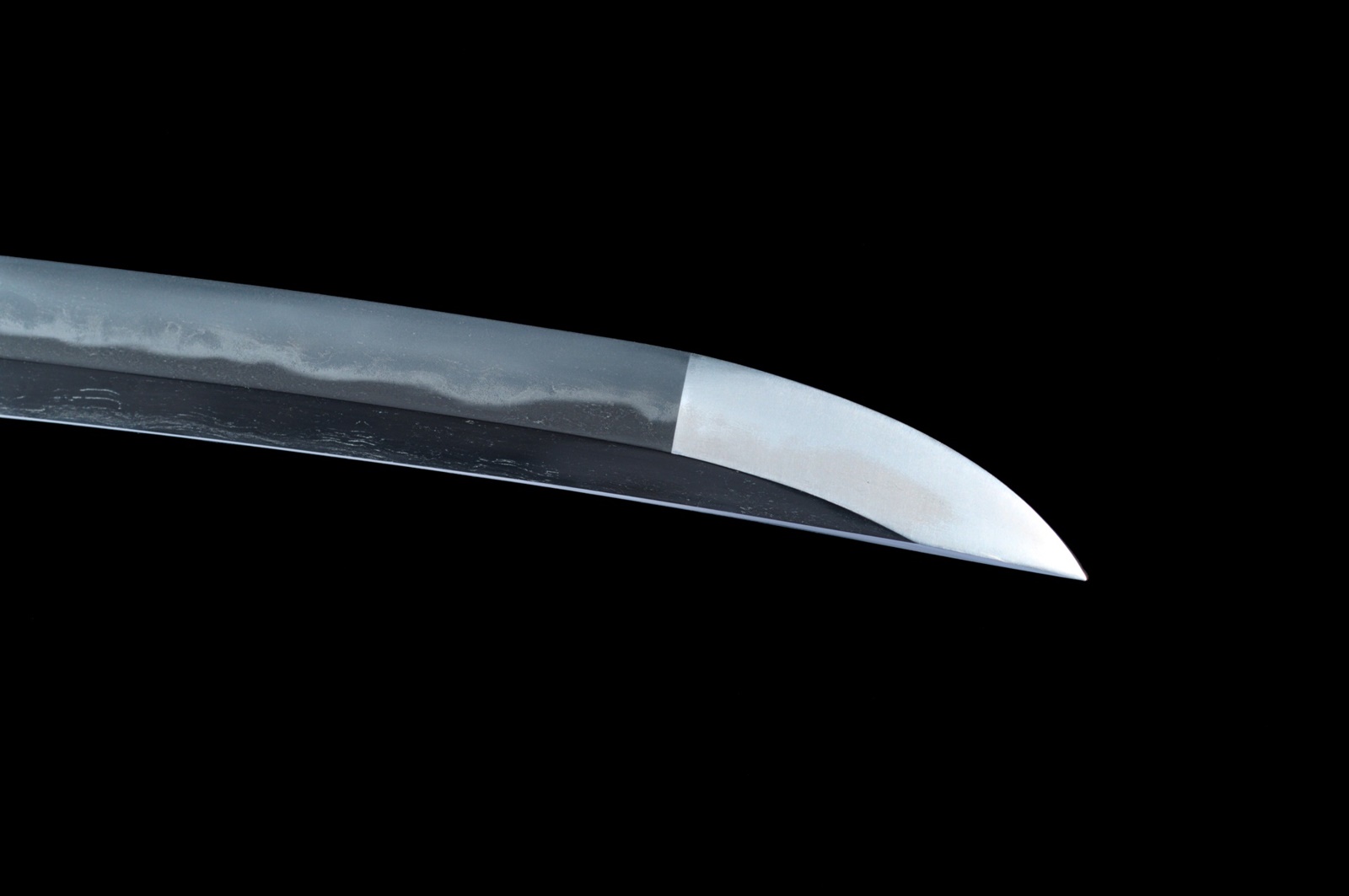
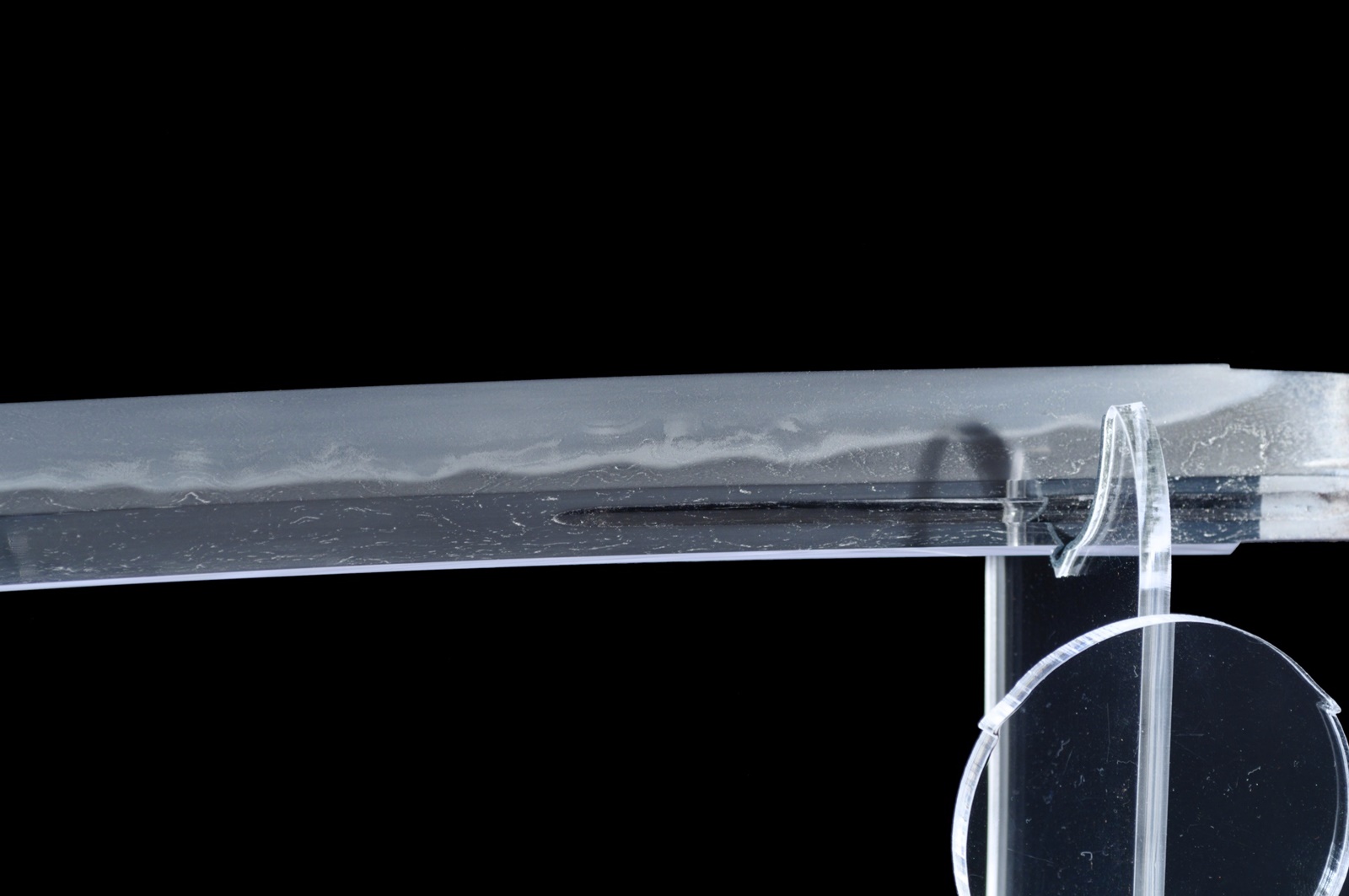
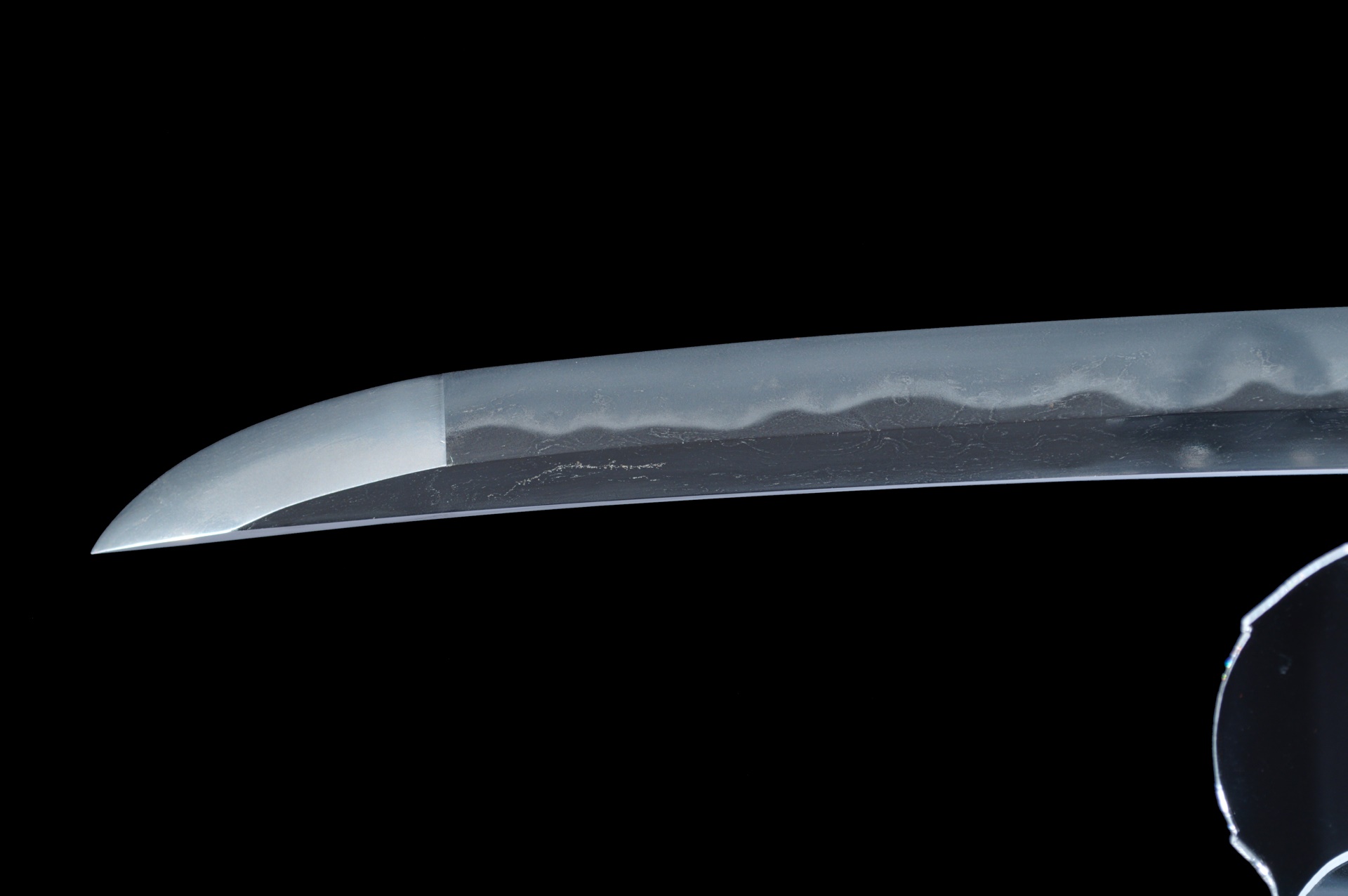
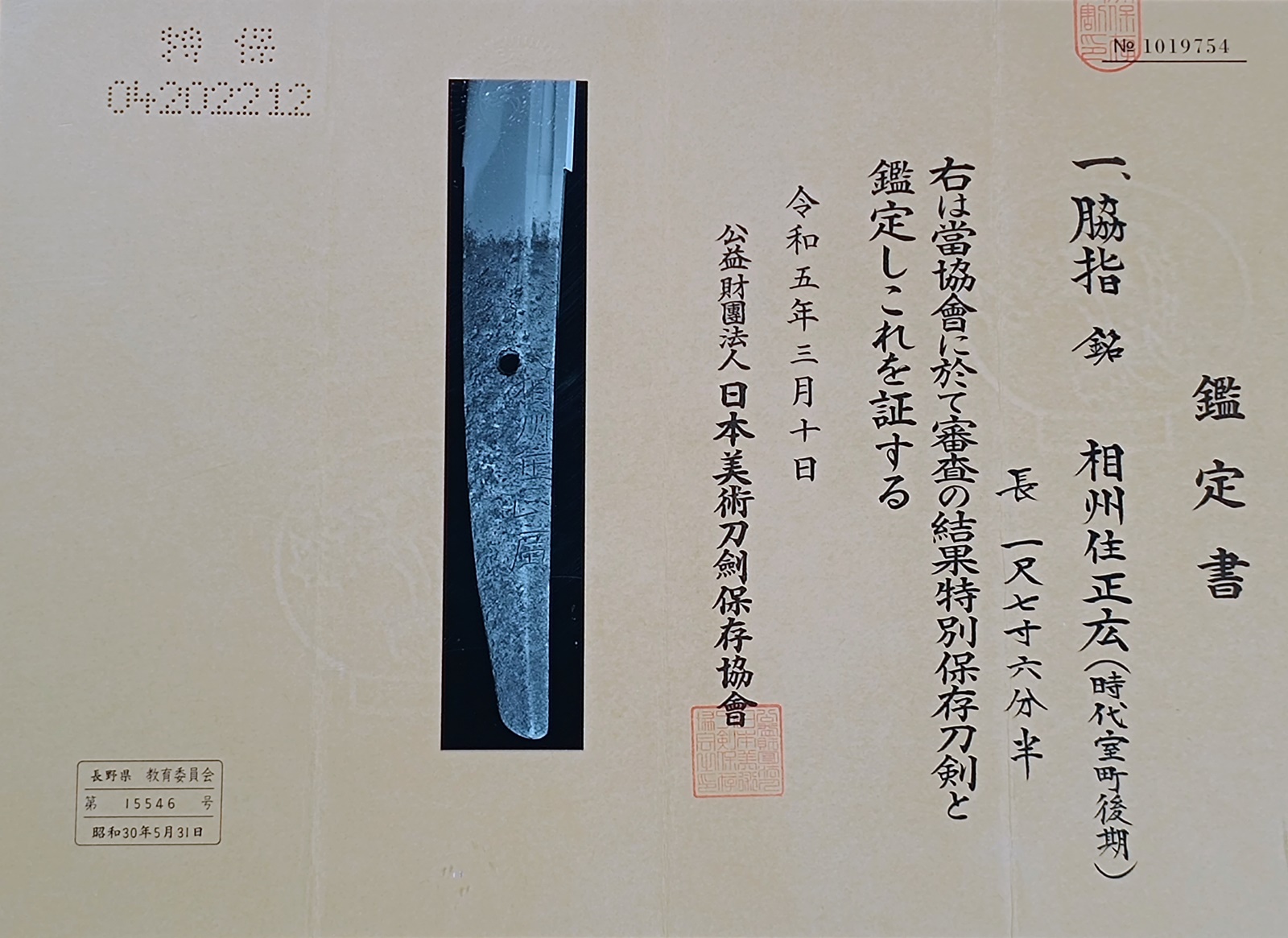
Superb ubu (unshortened) blade, signed, in perfect condition, and crafted in a beautiful and rare sugata (shape) with a thickness that tapers towards the shinogi-ji on the omote side. High-quality horimono, shaped like grooves, are present on both sides of the first section of the blade.
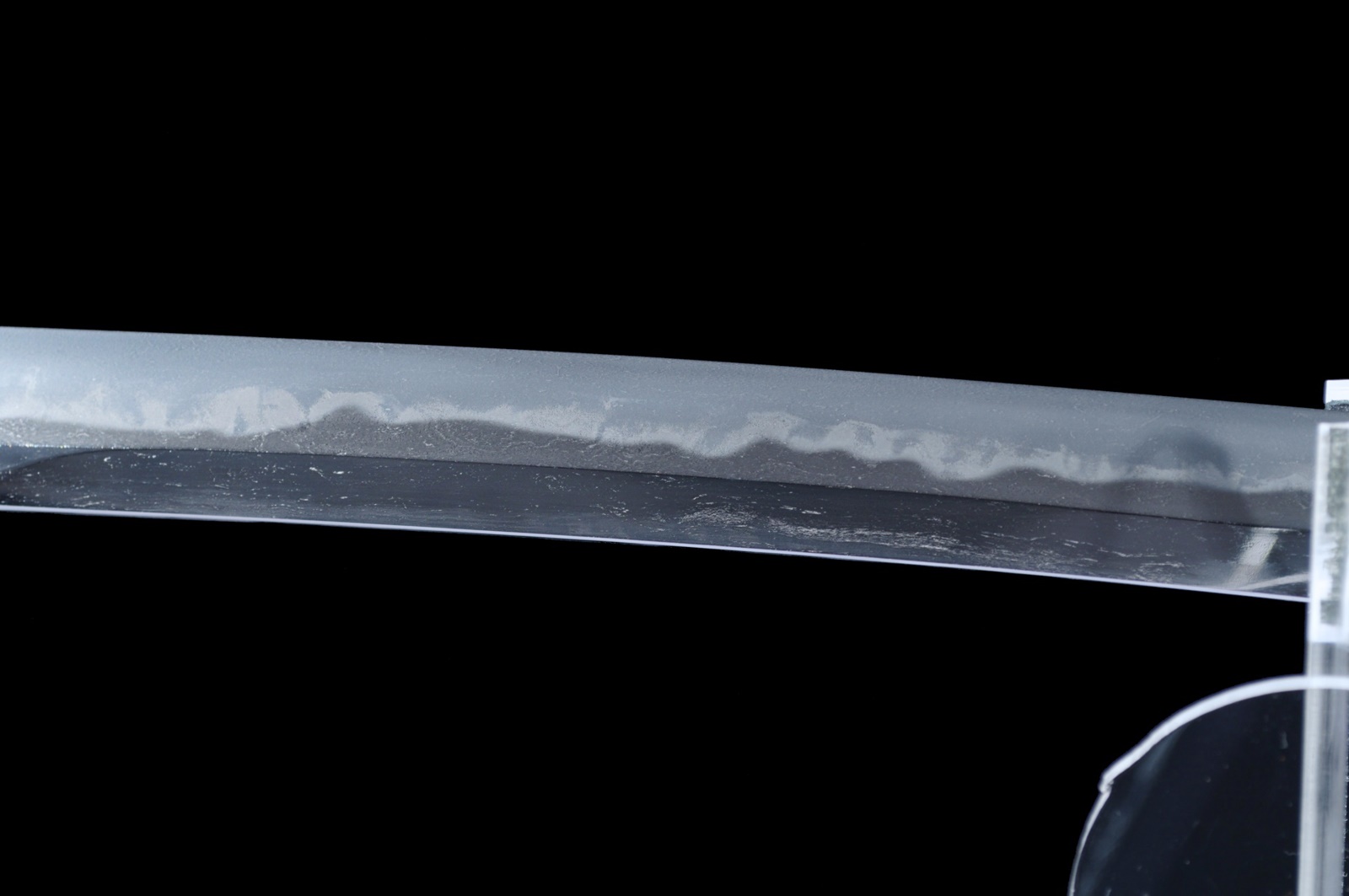
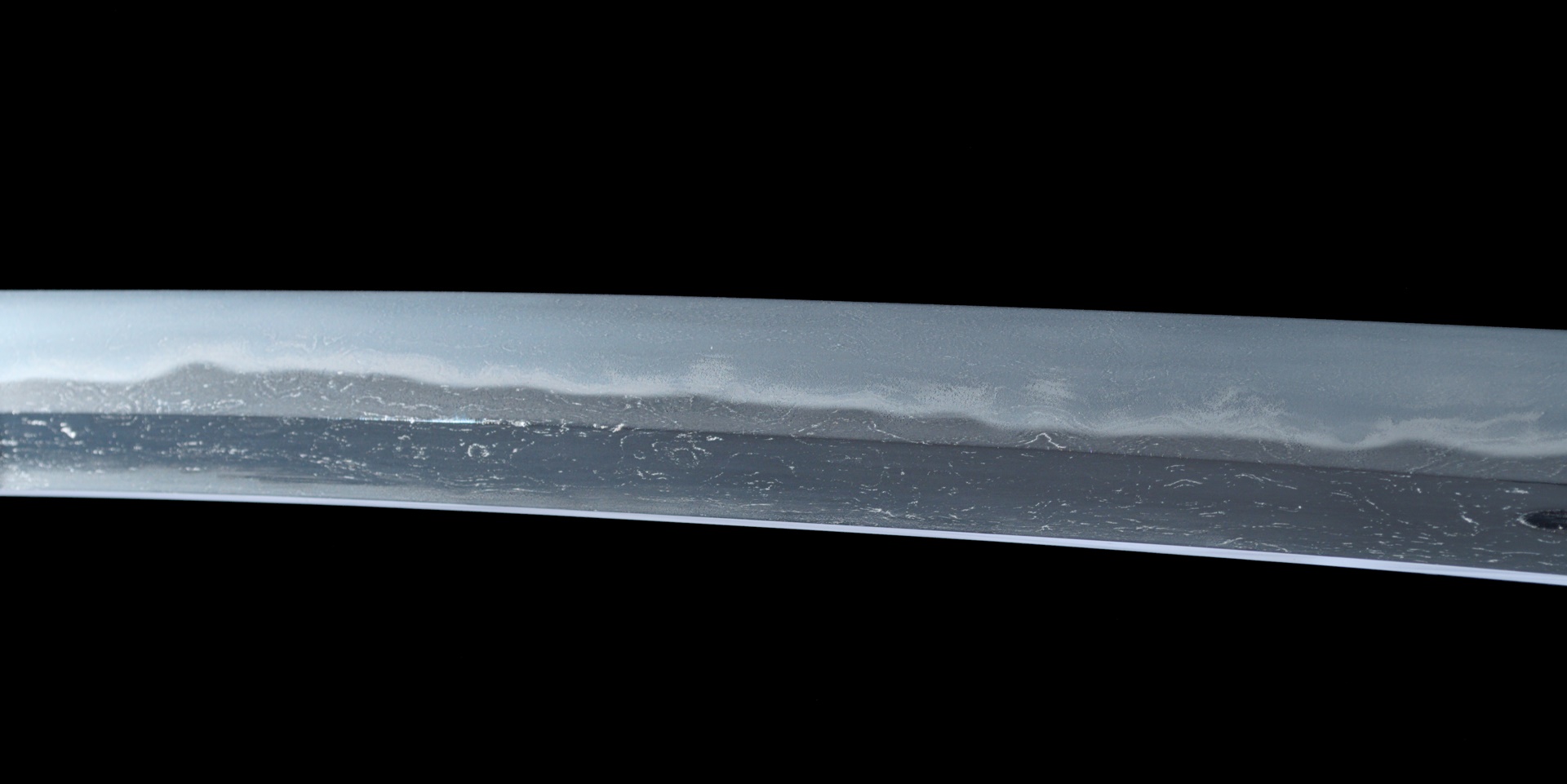
The hamon is made of ko nie-deki with a beautiful Midare Hitatsura design, typical of this talented swordsmith’s work.
The jihada was forged from a fine itame with moku and ji-nie elements.
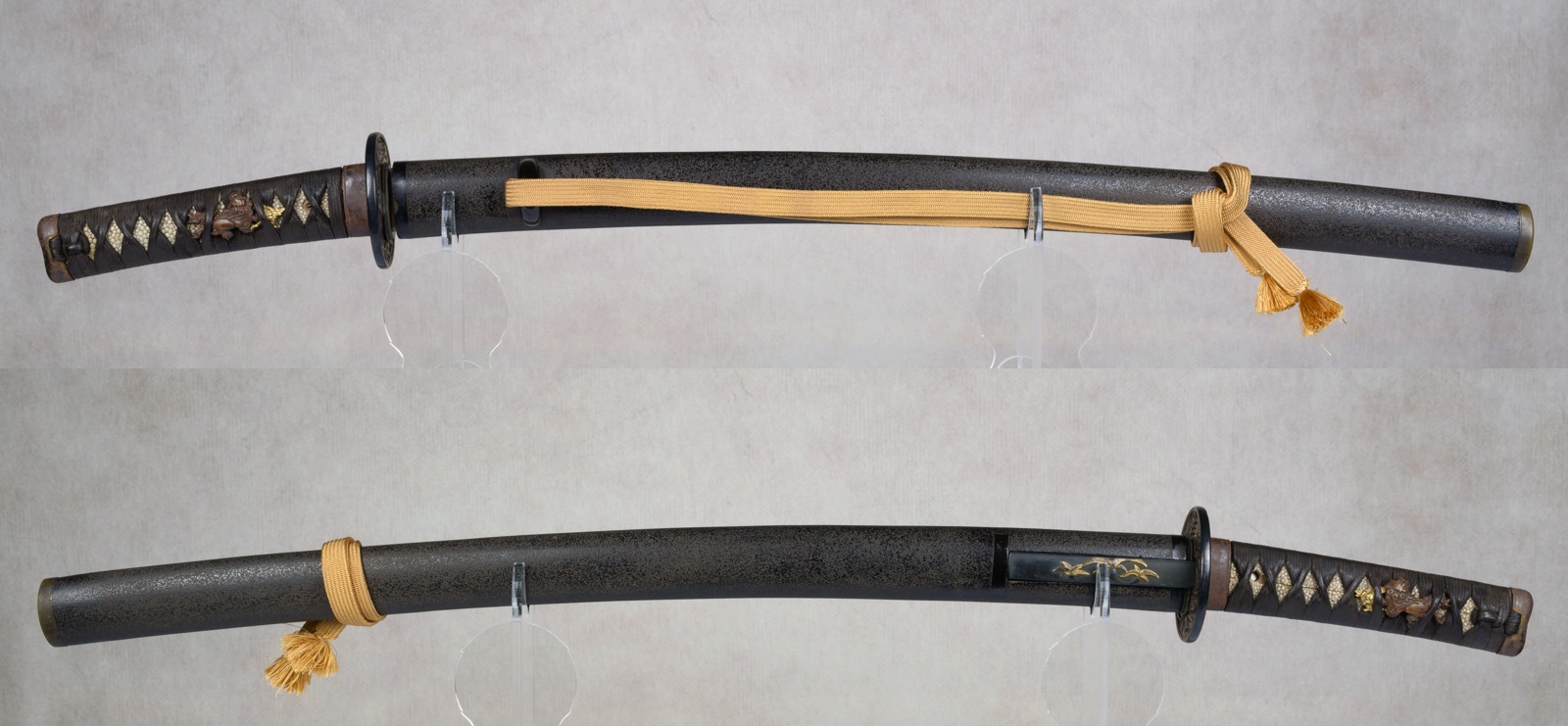
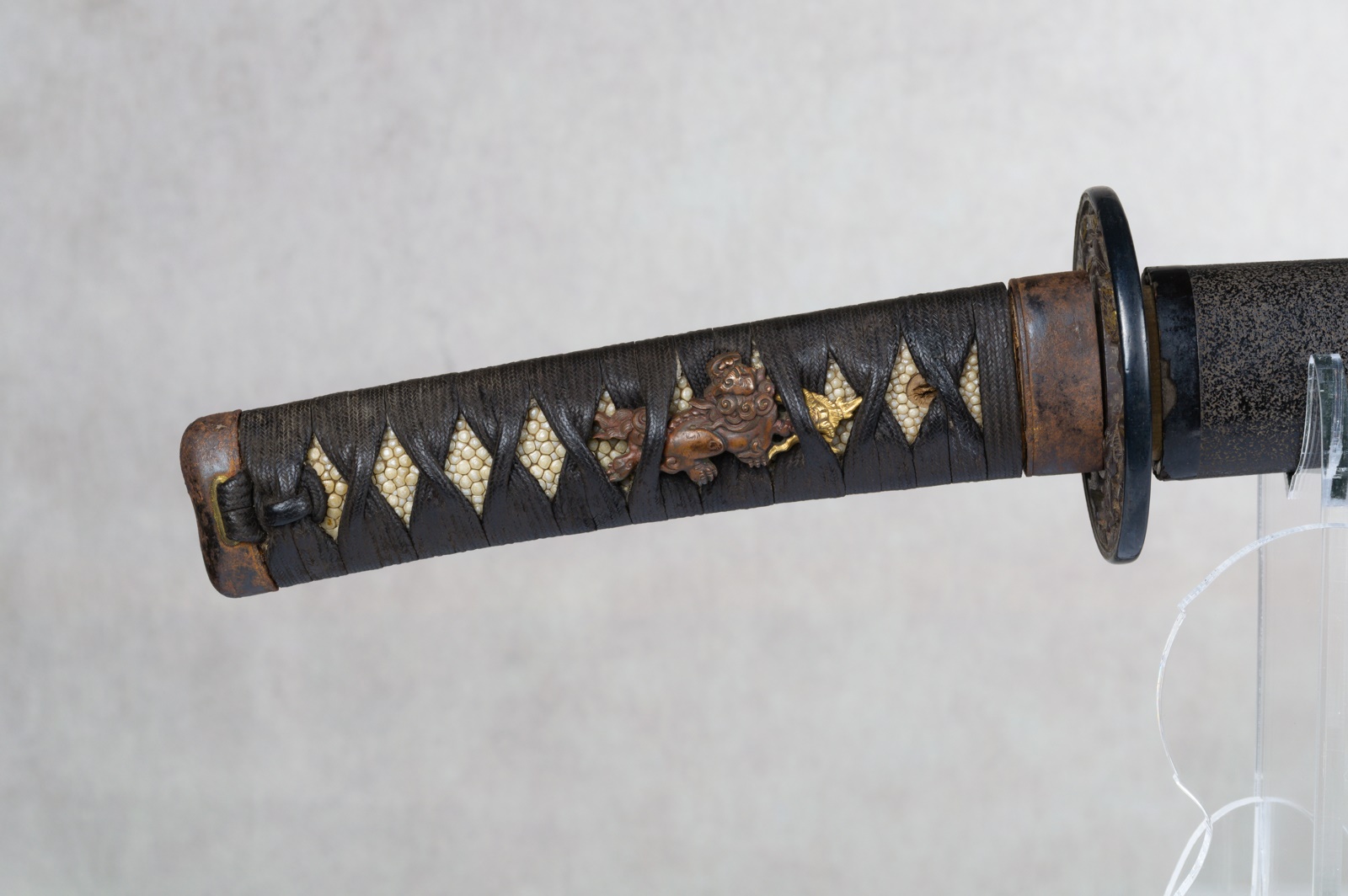
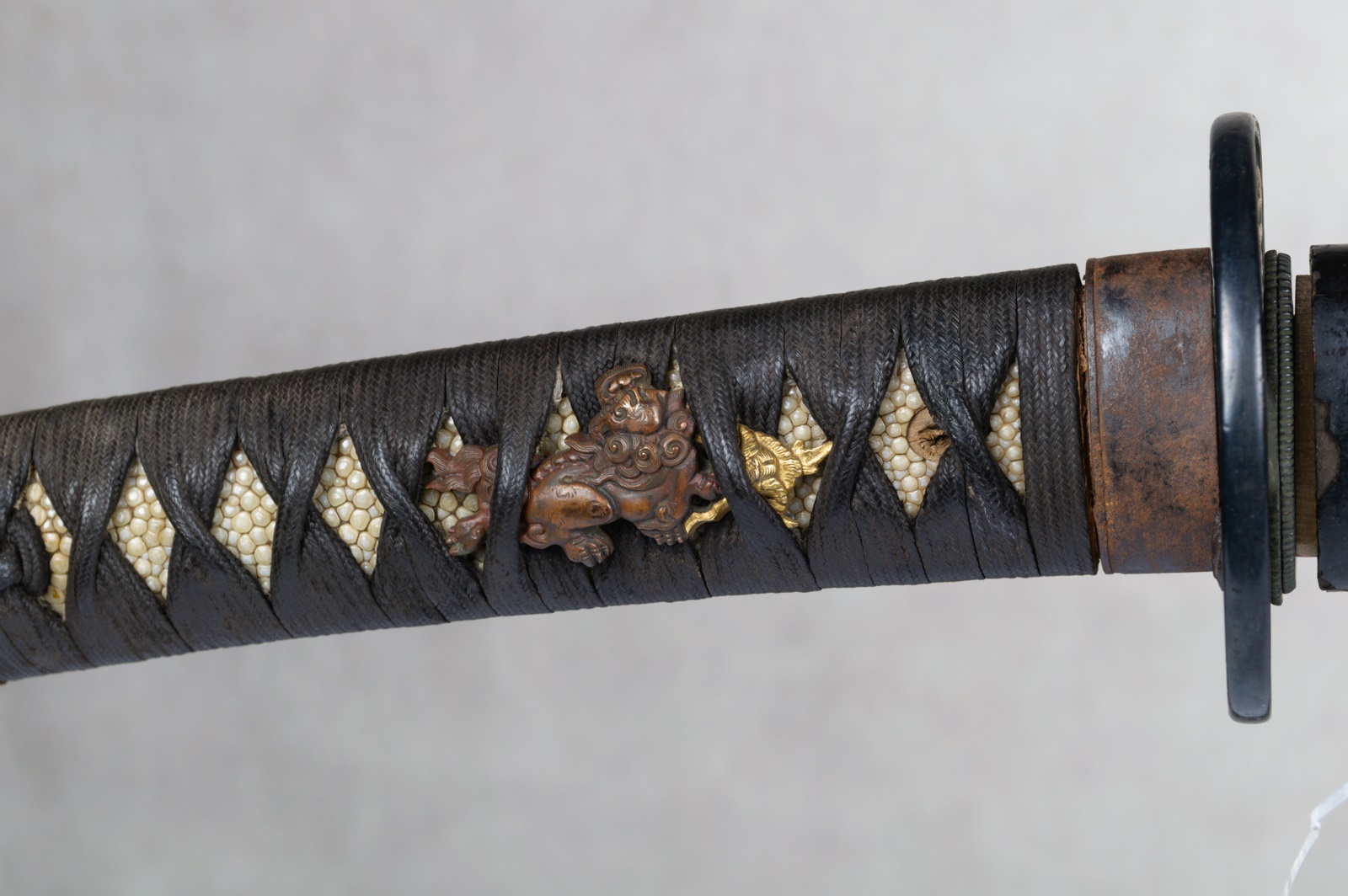
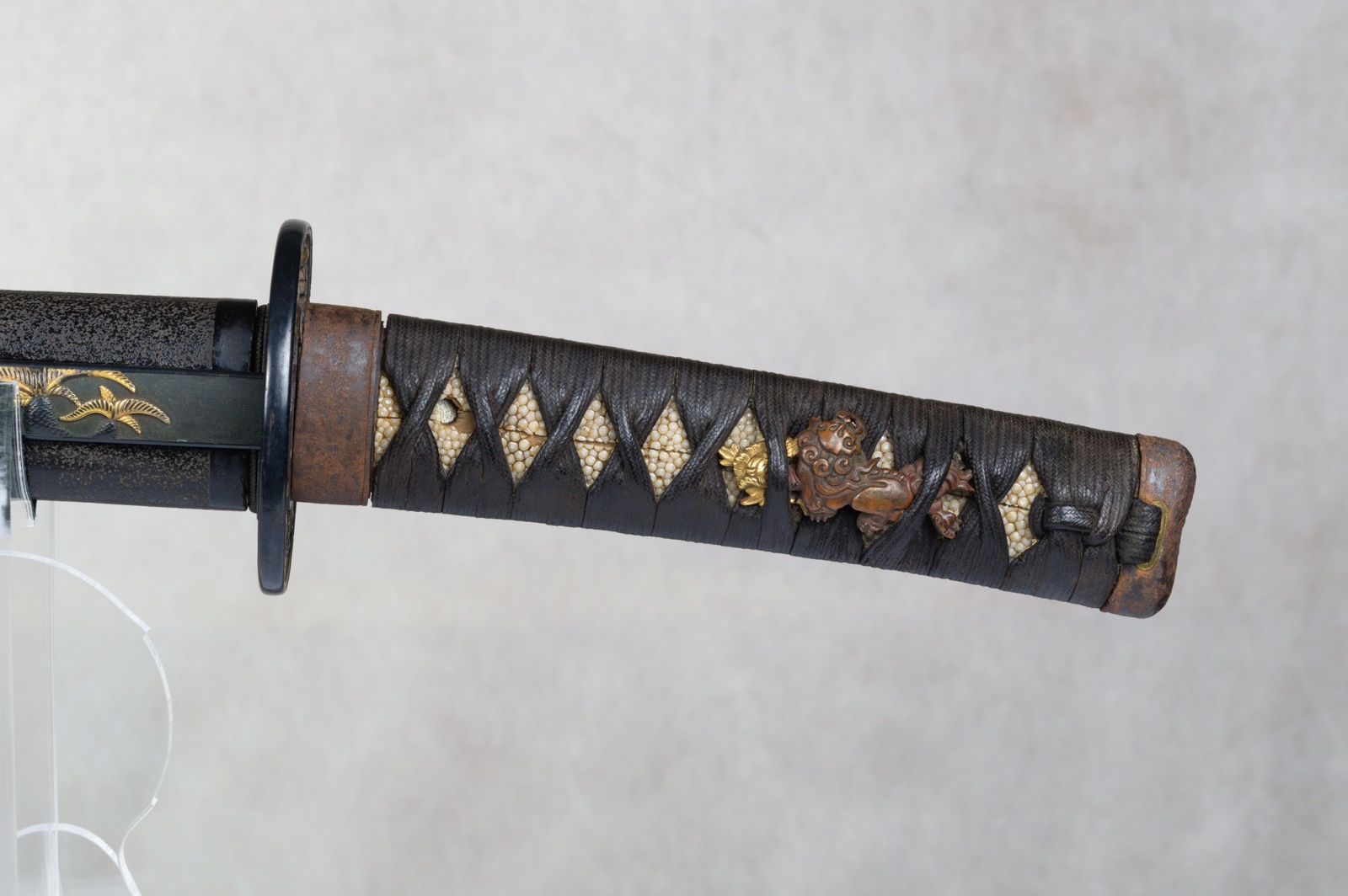
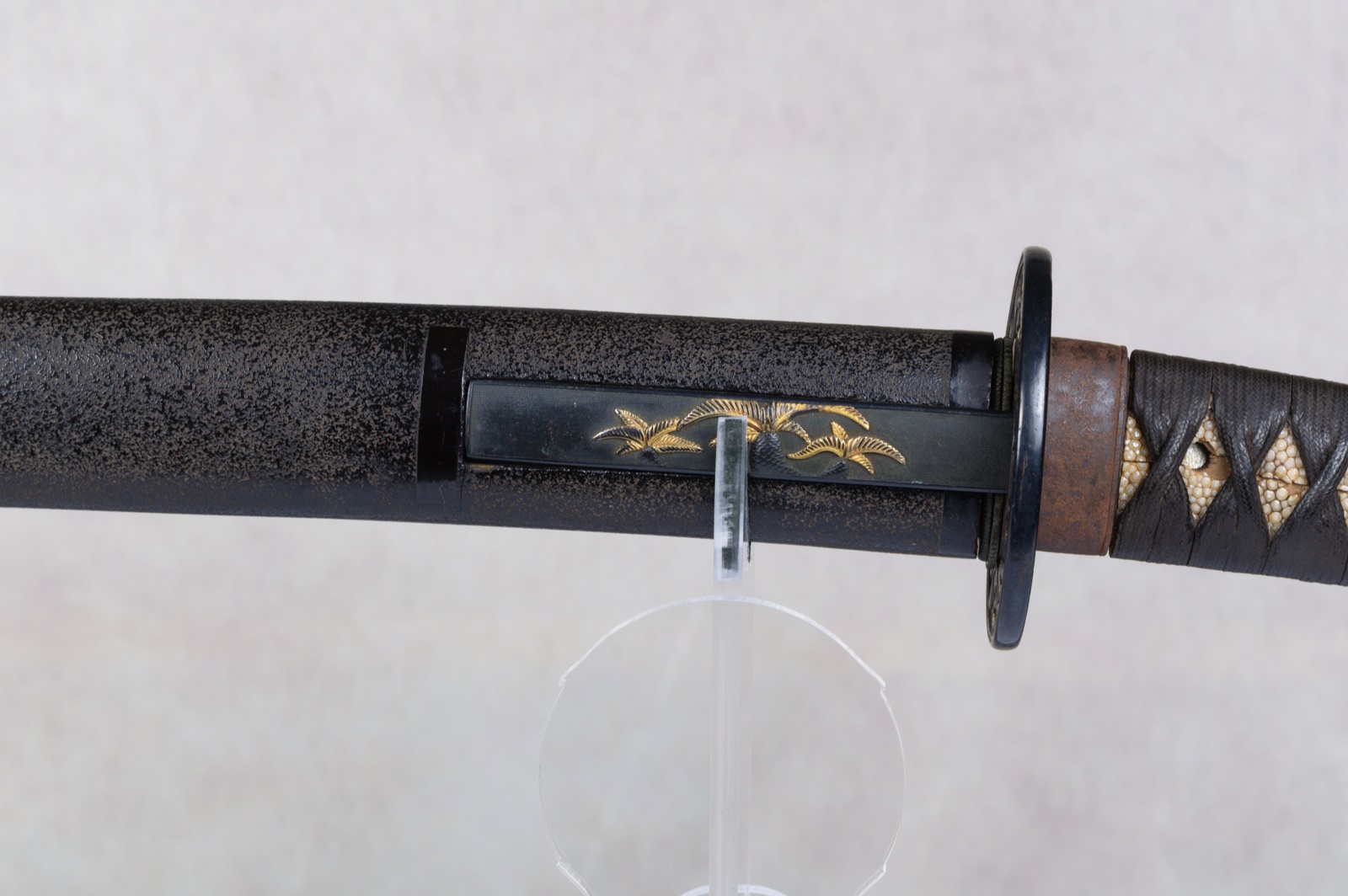
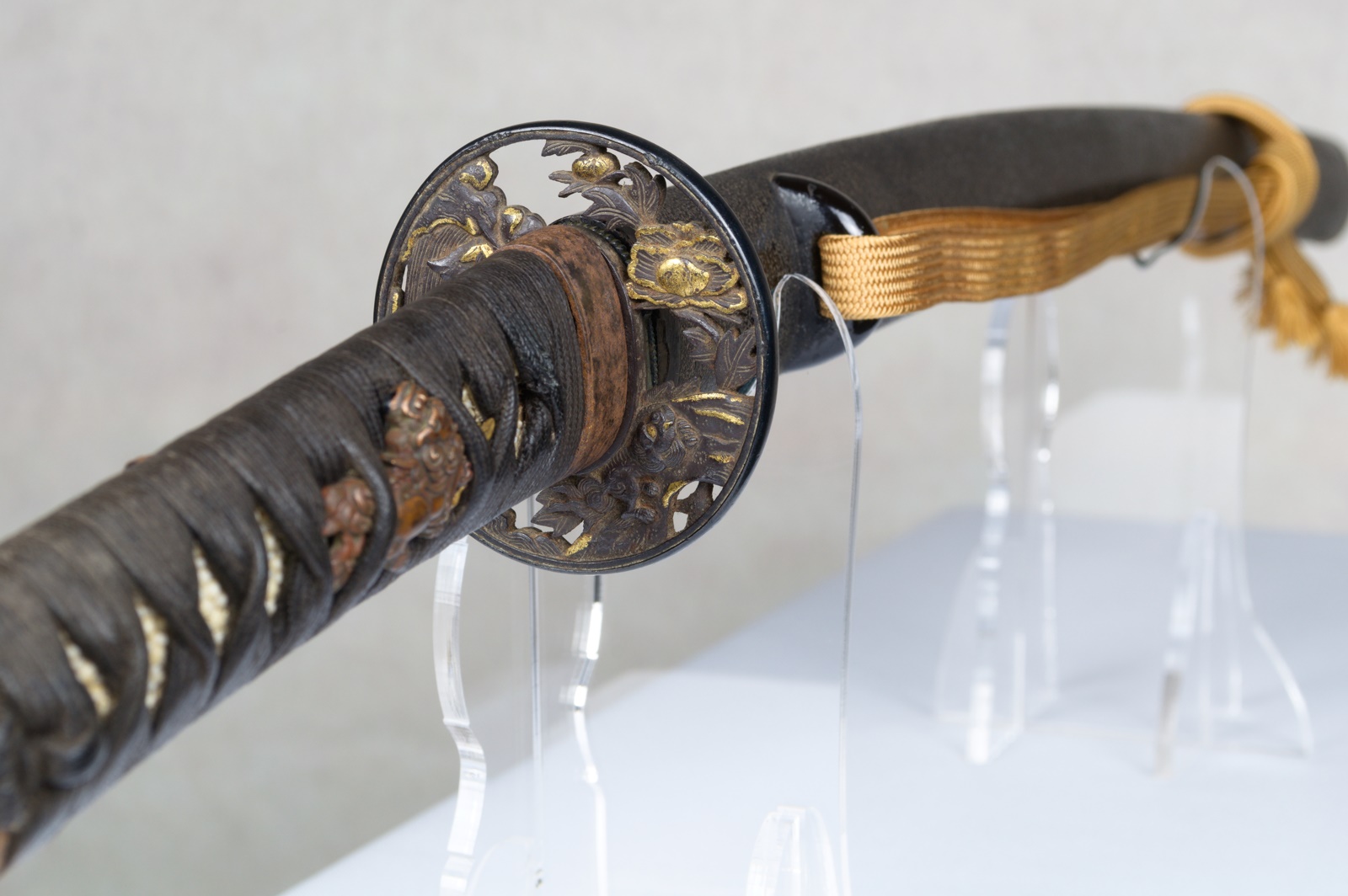
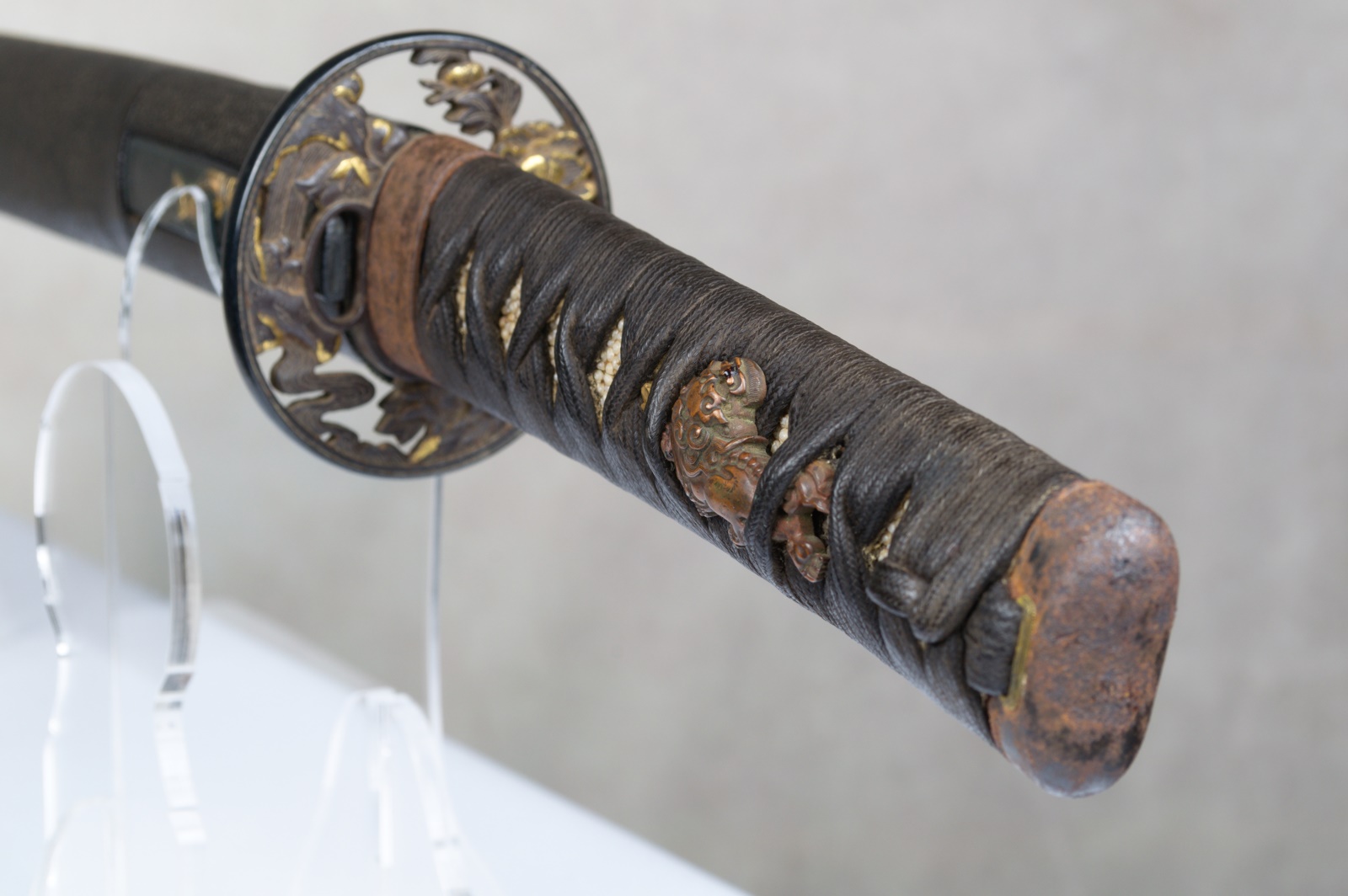
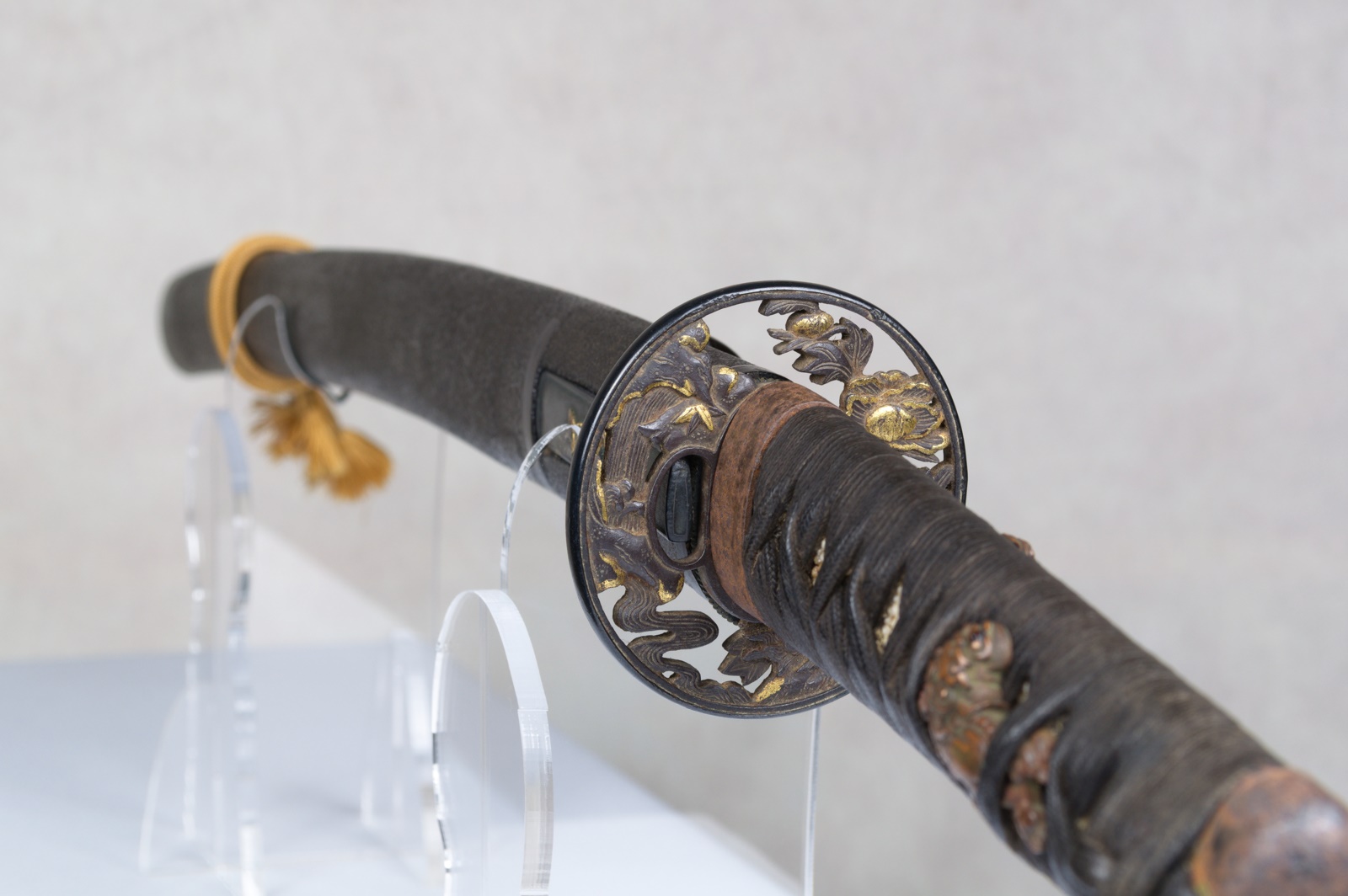
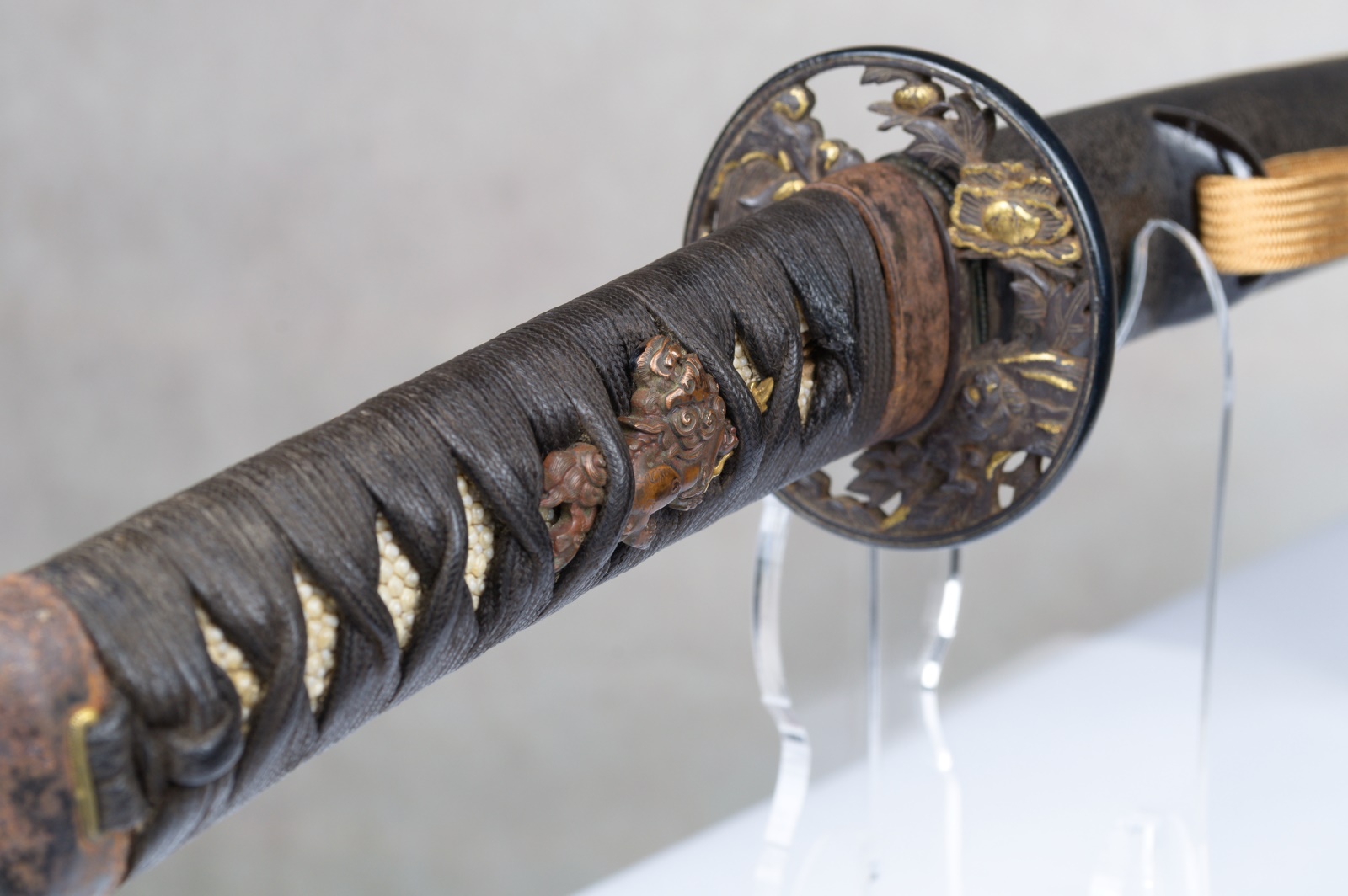
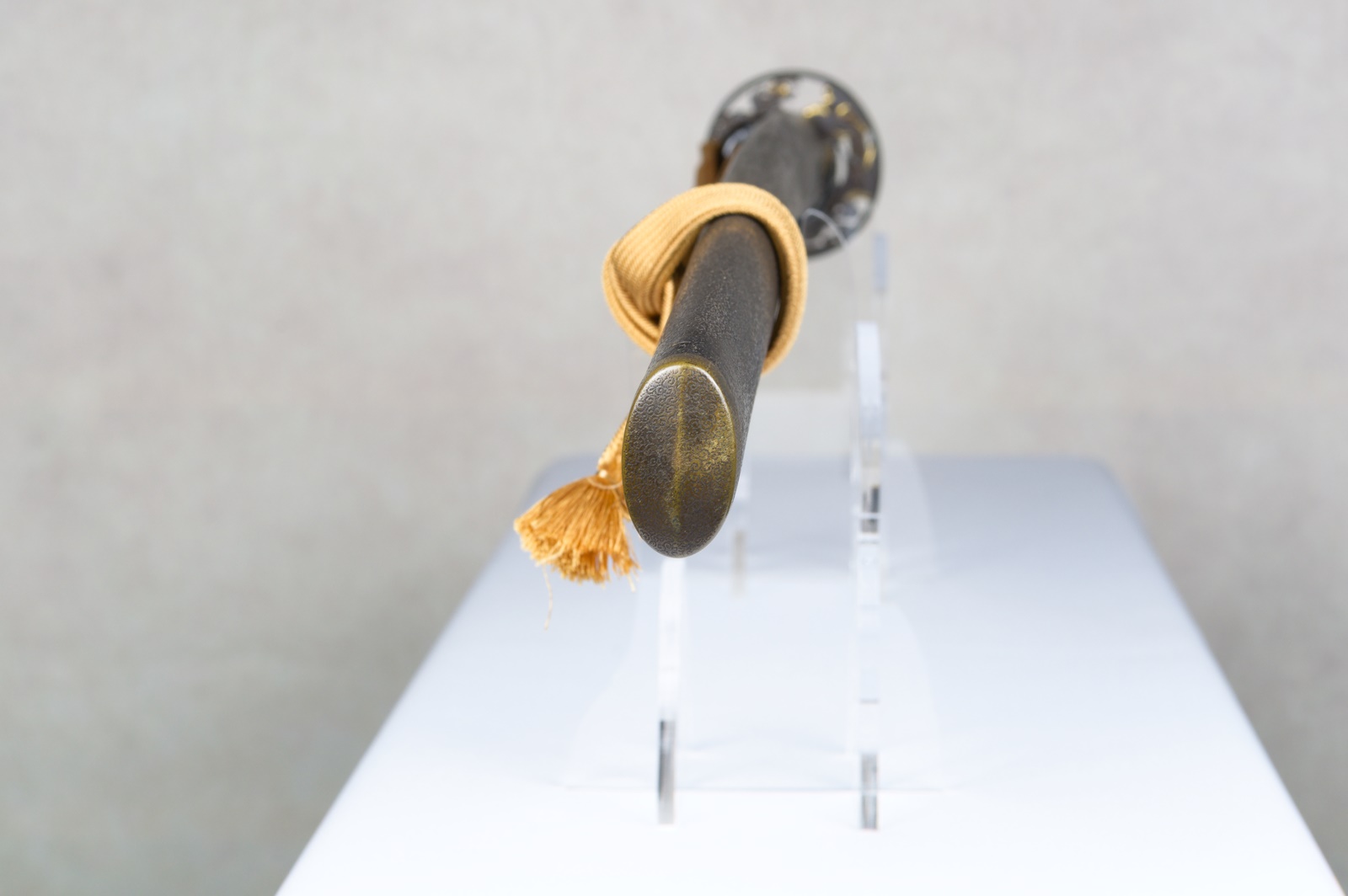
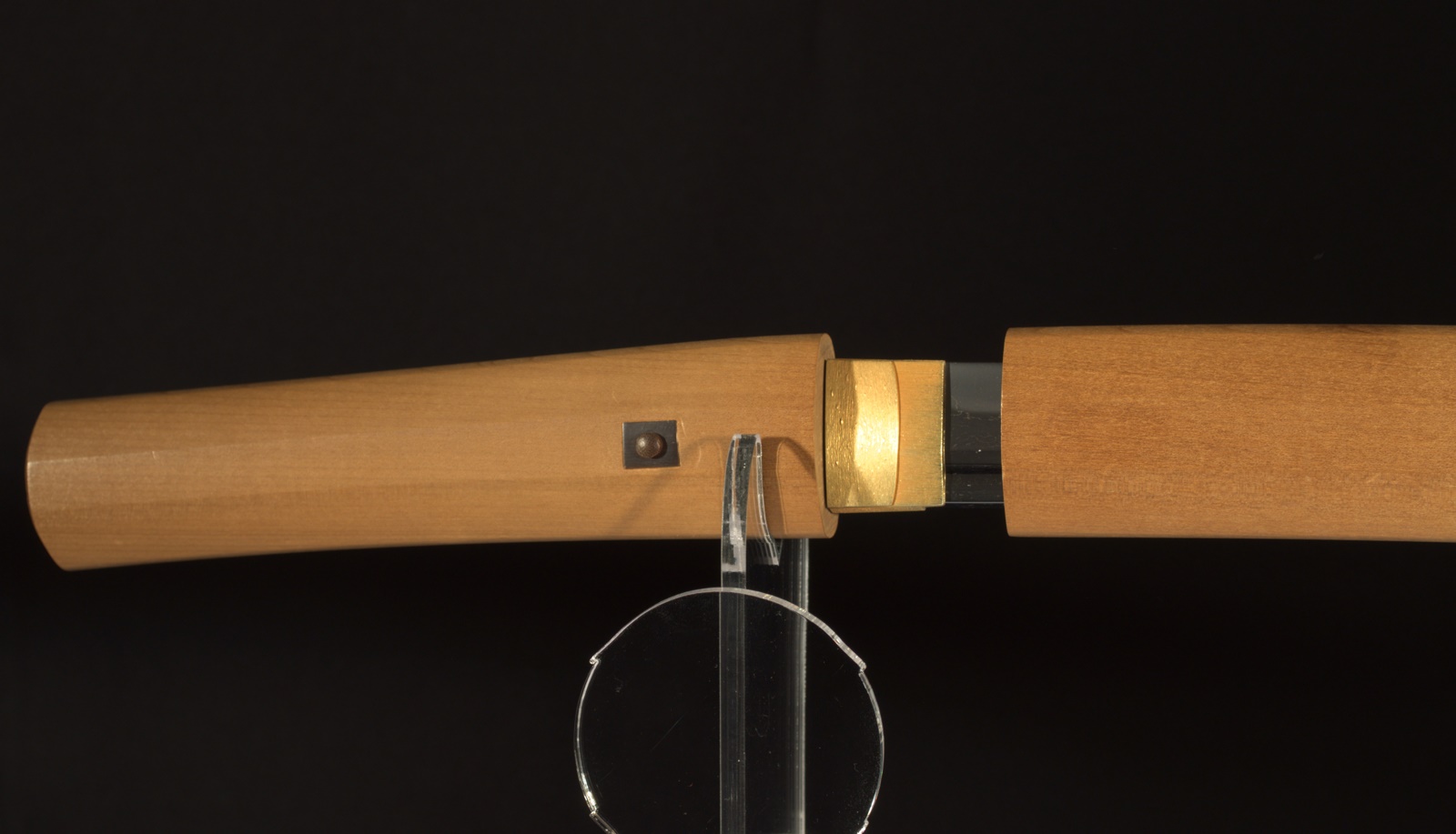
The koshirae dates from the Edo period and features primarily iron and copper elements depicting the Shishi lion.
The tsuba, also featuring the Shishi lion, is made of iron with a shakudo fukurin, an openwork design with gilt decoration.
The menuki are imposing and of very high quality, depicting two copper Shishi lions accompanied by gilt peonies. The kozuka is finely crafted in shakudo with a floral motif and gilt decoration.
NBTHK Tokubetsu Hozon Certificate
Fujishiro Grade (Prestige of the swordsmith) : Koto Josaku
Yamada Grade (Cutting power efficiency) : Ryowazamono
Blade Dimensions:
Nagasa: 53.5 cm
Motohaba: 3 cm
Motokasane: 6.5 mm
Sori: 1.2 cm
Sōshū-den refers to one of the five Japanese sword-making traditions known as « Gokaden » during the Koto period (late Heian to early Momoyama). It is distinguished by several leading swordsmiths in the history of Japanese swordmaking (Masamune, Sadamune, Go Yoshihiro, Kunimitsu, Kunihiro, etc.) and has inspired the greatest swordsmiths of all eras.
Masahiro (or Yamamura Tsunahiro) was considered the best and most influential swordsmith in Sue Soshu. He was active around the Tenmon era (1532-1555), and his first signature was « Masahiro, » which he changed to « Tsunahiro » when he worked for Hōjō Ujitsuna of the Go-Hōjō clan, one of the most powerful warrior clans of the Sengoku period (1477-1573).
As can be seen here, the quality of his work is remarkable. He also excelled in engraving, and many of his blades feature Horimono (carved decorations). This sword is therefore a perfect example of what Masahiro was capable of: a true work of art.
7200 €