Wakizashi Oyogo Kunishige
Wakizashi Oyogo Kunishige – 大与五国重
Read more ›Wakizashi Oyogo Kunishige – 大与五国重
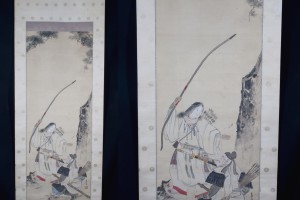
Read more ›Kakejiku (or hanging scroll), also called Kakemono. Contemporary reproduction of a work by Fujisawa Nangaku (1842-1920). Born in Sanuki province, the eldest son of Fujisawa Toga, he was an active Confucian scholar from the end of the Edo period until the Meiji period. He inherited the Osaka Hakuen Academy from […]
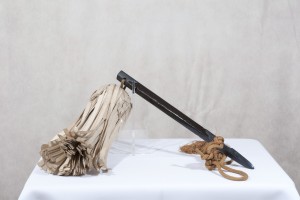
Read more ›The Saihai is a staff of command used by the samurai, but also a distinctive sign of social rank. Only high-ranking samurai were therefore allowed to carry it. Edo period Some lacquer repairs, but overall condition is very good. This item is quite rare, and will be a great addition […]
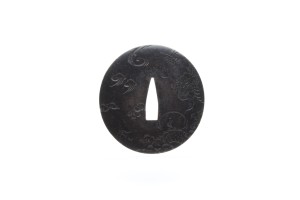
Read more ›Unryu dragon themed shakudo tsuba Edo period Mumei Beautiful work in kebori and katakiri bori with Unryu dragon pattern in the clouds. Dimensions : 74,2 x 71,5 x 6 mm 550 €
Read more ›Rare sunobi tanto (or wakizashi) signed Masazane – 正真 Muromachi Bunki 1501 – Ise Sengo school – 千子 This magnificent blade of 32,5 cm nagasa, ubu and signed, is a beautiful and rare example of the work of the prestigious Sengo Masazane. The kitae is in itame hada, and the […]
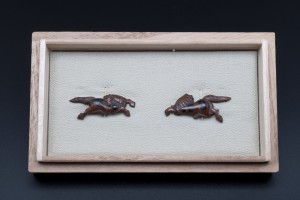
Read more ›Menuki depicting two frightened horses. Edo period. Nice work done in suaka and shakudo. The eyes are gold inlays. Dimensions : 1) 40,5 x 12 mm 2) 41,5 x 16 mm Sold
Read more ›Iron tsuba signed Seiryuken Eiju w / Kao – 成龍軒榮壽 The pattern is specific to this school. Quality work, in excellent condition with a nice patina. Edo period Tetsugendo School Seiryuken Eiju, also known as Hamano Norishige, was the direct student of the great Tetsugendo Naoshige. 54,1 x 51,3 mm […]
Read more ›Kinko Mokko Gata style tsuba in shakudo. Fine and precise work of high quality. Edo period. 74,4 x 69,2 mm Sold
Read more ›This Tibetan sword (or glaive) is extremely rare. It comes from Bhutan, a Himalayan kingdom of Tibetan culture, and dates from the 19th century. The blade, wide and thick, has two gutters with a beautiful gray patina. The scabbard is made of a single wooden plank hollowed out in the […]
Read more ›Superb and fine Katana Kake dating from the end of the Edo period, decorated with a very beautiful traditional lacquer work called Maki-e (絵). The decorations take the form of a lion surrounded by peonies with leaves encrusted with mother-of-pearl, sakura flowers on the feet, and butterflies in flight on […]
Read more ›